World Cup 2026: controversies over visas and border controls
A series of incidents involving visas, border controls and US entry restrictions is casting doubt on FIFA’s ability to guarantee equal treatment.
Translated from Portuguese. Read the original →
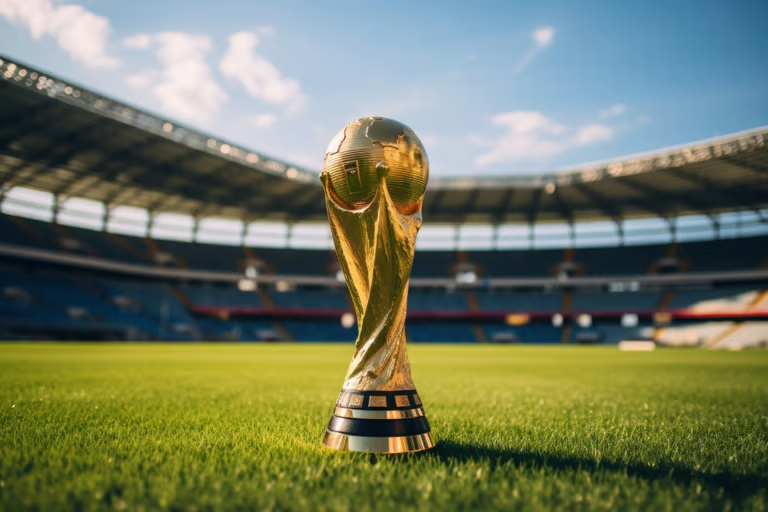
Less than a year before the decisive phase of the 2026 World Cup, hosted by the United States, Canada and Mexico, a series of incidents involving visas, border controls and entry restrictions into the United States is causing strong controversy and casting doubt on FIFA’s ability to guarantee equal treatment for every team, referee and supporter taking part in the competition.
Over the last 48 hours, reports have multiplied of difficulties faced by players, referees, officials and fans from different parts of the world.
Swiss striker Breel Embolo had his visa placed under review, which prevented him from joining the Swiss squad on schedule. Only several days later was he finally able to enter the United States and join the team.
Iraq’s national team also ran into problems. Striker Aymen Hussein was held for almost seven hours for questioning on arrival in the United States, a situation that angered officials of the Iraqi federation.
Iran’s team was affected too. The squad spent several days dealing with bureaucratic procedures at the US consulate in Turkey. In addition, the American authorities only allowed the delegation to enter on match days. The situation became even more serious when fifteen members of the Iranian delegation had their visa applications refused.
Another case that caused a great stir was that of Somali referee Omar Abdulkadir Artan, named Best African Referee of 2025 by the Confederation of African Football (CAF). Despite travelling on a diplomatic passport, he was refused entry to the United States and sent back to his home country. FIFA later confirmed that the referee would not be able to take part in the tournament.
South Africa’s team also suffered significant delays in its preparation. Part of the delegation did not receive the necessary visas in time, forcing the team to arrive in the United States much later than originally planned.
Meanwhile, members of Senegal’s technical staff denounced treatment they described as humiliating during border checks. According to reports, several of them were made to remove their shoes and subjected to lengthy searches, leading some officials to accuse the authorities of discriminatory and racist behaviour.
The situation gained even more visibility when images of Uzbekistan’s team being inspected by explosive-sniffing dogs went viral on social media and in the international press.
Not even the fans were spared. Some Scotland supporters, who in theory could enter the United States without a visa under the ESTA programme, had their travel authorisations revoked a few days before departure.
In addition, many fans of various nationalities say they have lost thousands of euros after their visa applications were rejected, despite having already bought match tickets, booked hotels and paid for flights.
A problem for FIFA
Although immigration controls are the responsibility of the American authorities, many observers believe FIFA underestimated the risks of staging the planet’s biggest football event amid strict immigration policies.
The body that governs world football repeatedly promised that every team, referee and supporter would be received on equal terms and without unnecessary obstacles. Yet recent events show a very different reality.
The difficulties faced by African, Asian and Middle Eastern countries raise questions about the universality of football and about FIFA’s ability to protect all participants fairly.
If these problems persist throughout the tournament, the 2026 World Cup risks being remembered not only for the spectacle on the pitch, but also for a string of controversies over immigration, discrimination and entry restrictions.
For many critics, the events of recent days are a serious warning to FIFA: organising a World Cup is not just about building stadiums or selling tickets. It also means making sure that every participant can reach the tournament in fair and dignified conditions.
And on that front, the first signs are far from reassuring.