The Crisis of Authority in the West: The Limits of Freedom and the Challenges Facing Democracy
Translated from Portuguese. Read the original →

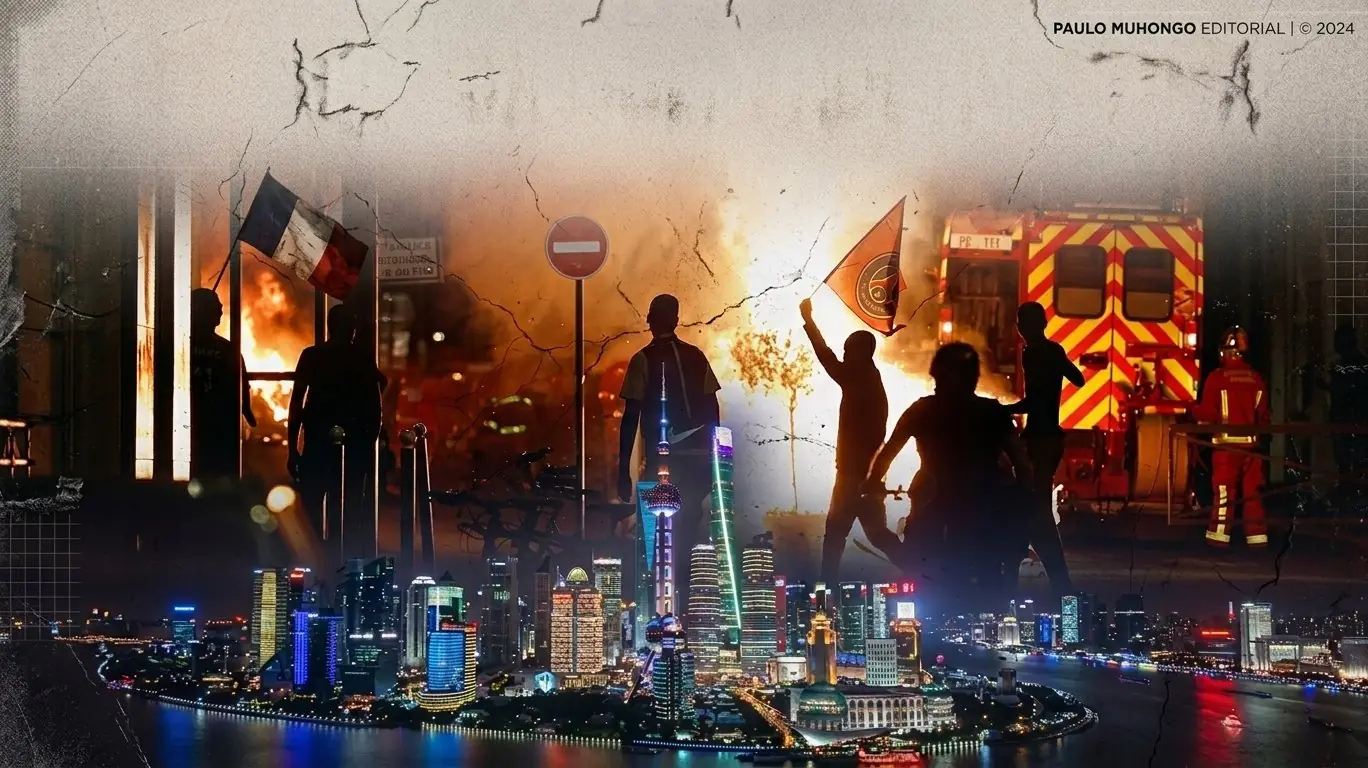
The wave of social unrest and riots sweeping across France has reignited a profound debate about the sustainability and real limits of Western democracy. Scenes of destruction targeting public infrastructure, involving largely groups of teenagers who do not always appear to have a clear understanding of the underlying political causes, expose a serious breakdown in the social fabric, in which the right to protest is sometimes confused with gratuitous vandalism. Faced with this reality, it is imperative to question the extent to which the concepts of freedom of expression and the right to demonstrate in the West have been distorted, to the point of being regarded as factors contributing to the weakening of the state.
The Illusion of Absolute Freedom and the Crisis of Authority
The liberal assumption that all societies are permanently prepared to exercise unrestricted freedom appears questionable in the current French context. The absence of a sufficiently firm government response to restore public order has, according to this perspective, contributed to the weakening of fundamental social norms and standards. For French political scientist Olivier Rouquan, the contemporary crises facing the country reveal a significant erosion of the presidential office, as well as a symbolic and practical weakening of state authority in the face of public disorder.
This fragmentation brings to mind the classical theories of sociologist Émile Durkheim on social anomie: when collective norms lose their force and institutional boundaries are no longer firmly enforced, society risks losing its cohesion, leaving individuals increasingly vulnerable to their own impulses. The proliferation of subjective perspectives, in a context where each individual considers themselves the sole bearer of an isolated truth, undermines the foundations of collective life. No society can function sustainably without rules shaped and consolidated by historical experience.
The Asian Model: Efficiency, Order and Technological Progress
This crisis of authority and civic responsibility in the West contrasts with the economic and technological landscape of Asia, particularly China. Frequently analysed in the West through a binary opposition between democracy and authoritarianism, the Asian model of governance presents macroeconomic indicators, levels of industrial production and gross domestic product (GDP) figures that challenge the economic pre-eminence of Europe's liberal powers.
The philosopher and political scientist Francis Fukuyama, in reflections published after his thesis on the end of history, acknowledges the importance of state effectiveness and the capacity for long-term planning. These capabilities are closely linked to the degree of authority and stability that institutions can ensure. Several Asian countries have demonstrated that collective discipline and the rigorous enforcement of social norms can contribute to technological innovation and sustained material development. Their pragmatic approach to progress contrasts with the difficulties faced by some Western societies, which are increasingly marked by political and social divisions.
From the Enlightenment to Paralysis: The Cultural Decline of the West
The apparent paralysis affecting France in certain areas raises questions when compared with its intellectual past as a pioneering nation. France played a decisive role in the development of science, philosophy and the social sciences, thanks in part to thinkers such as René Descartes and Blaise Pascal. At different points in its