Diseases of the soul: symptoms of a remote village
Translated from Portuguese. Read the original →
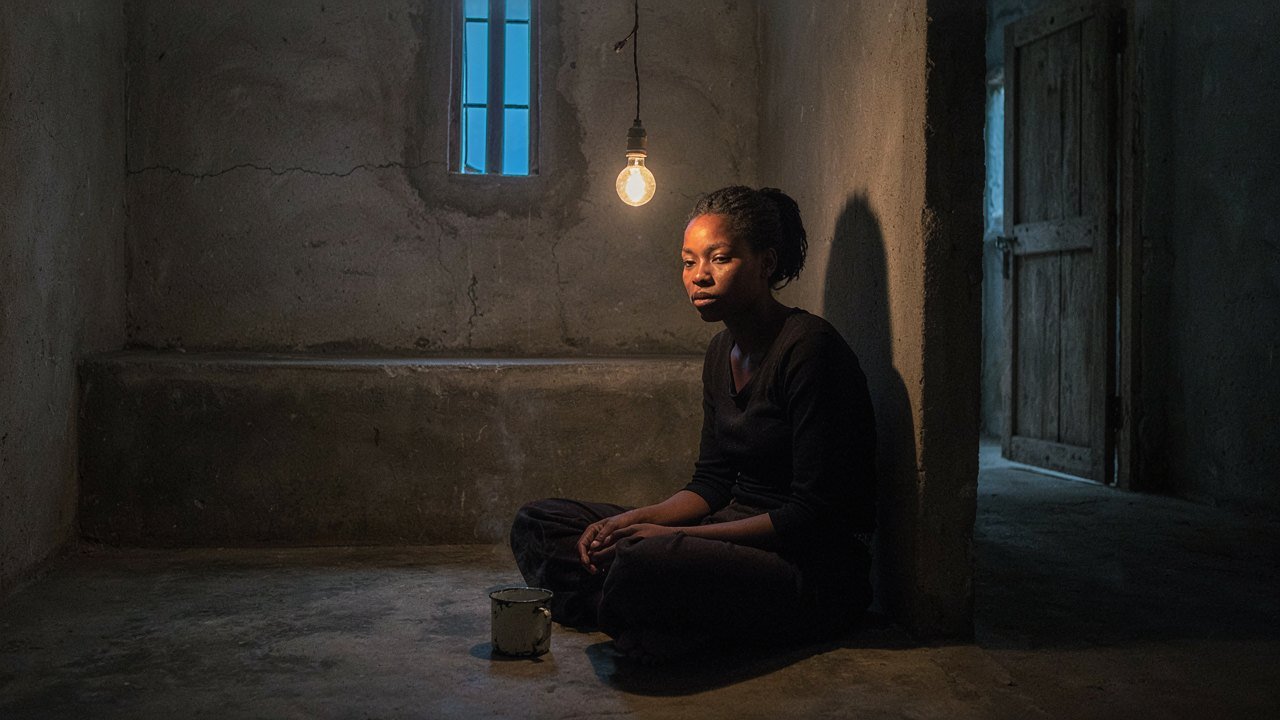
In the corner of the room, the lamp flickered in the same uncertain rhythm as Nsunzi’s thoughts. She stared at her own hands in bewilderment, as though they were nothing more than miniature versions of what they had once been: the tiny hands of a newborn baby. The mechanical pencil seemed larger than her fingers, and her sluggish mind could no longer find its way along the thread of a thought.
Depression had this subtle and cruel ability: it did not destroy things all at once; it gradually disrupted the rhythm of everything around it. The more the illness knocked at her door, the more Nsunzi curled into herself, the smaller her thoughts became, and the further she drifted away from other people.
In that village, there were no psychologists, no doctors, and no health centre. Nsunzi was the first person to experience something like this, and the explanation people settled on was the usual one: witchcraft, an attack by sorcerers against her family.
Her parents, farmers who had never learned to read, could not find the words to describe what was happening to their daughter. They called upon traditional healers and pastors, who were plentiful in the region. The pastors knew God, but they knew nothing about the diseases of the soul that medicine had learned to treat.
Nsunzi was at the age when girls make friends and accompany their families to the fields. Yet she spent her days locked inside the dark, windowless room of their mud-and-wattle house. She barely ate. The illness was slowly consuming a young girl in a land far removed from any hospital.
For months, sleep gave way to a heavy state of wakefulness, in which the silence of the night seemed to scream out every uncertainty about the future. Her parents no longer knew what to do for their only daughter. They had tried everything: pastors, traditional healers, ritual baths, prayers and traditional remedies. Nothing had worked. As for Nsunzi, she could no longer find any hope in the day ahead.
Life, plans, desires and conversations had all been postponed until some uncertain moment that never came. But the most painful part of this disconnection from the world was not the exhaustion of her body; it was the abyss that had opened up inside her own home.
That afternoon, little Quipuco approached her slowly, holding a drawing in his hands. He held out the paper, but Nsunzi could barely lift her eyes to look at him. Not because she did not love him, but because the fog had grown too thick to penetrate.
The boy withdrew his arm, took two steps back and quietly returned to the main room, where the family’s relatives and friends were gathered. That small, seemingly insignificant gesture hurt her more than all the sleepless nights combined. In her little brother’s bewildered gaze, Nsunzi realised that the bridge connecting them was beginning to collapse, not because they were physically apart, but because their frequencies no longer met.
That same night, as the door of the house creaked on its hinges, a strange noise rose from the path winding through the forest. The fate of this family was about to intersect with something the village had never imagined could exist…
(To be continued)