The Efiko Ritual: The Sacred Transition to Womanhood in Southern Angola
Translated from Portuguese. Read the original →

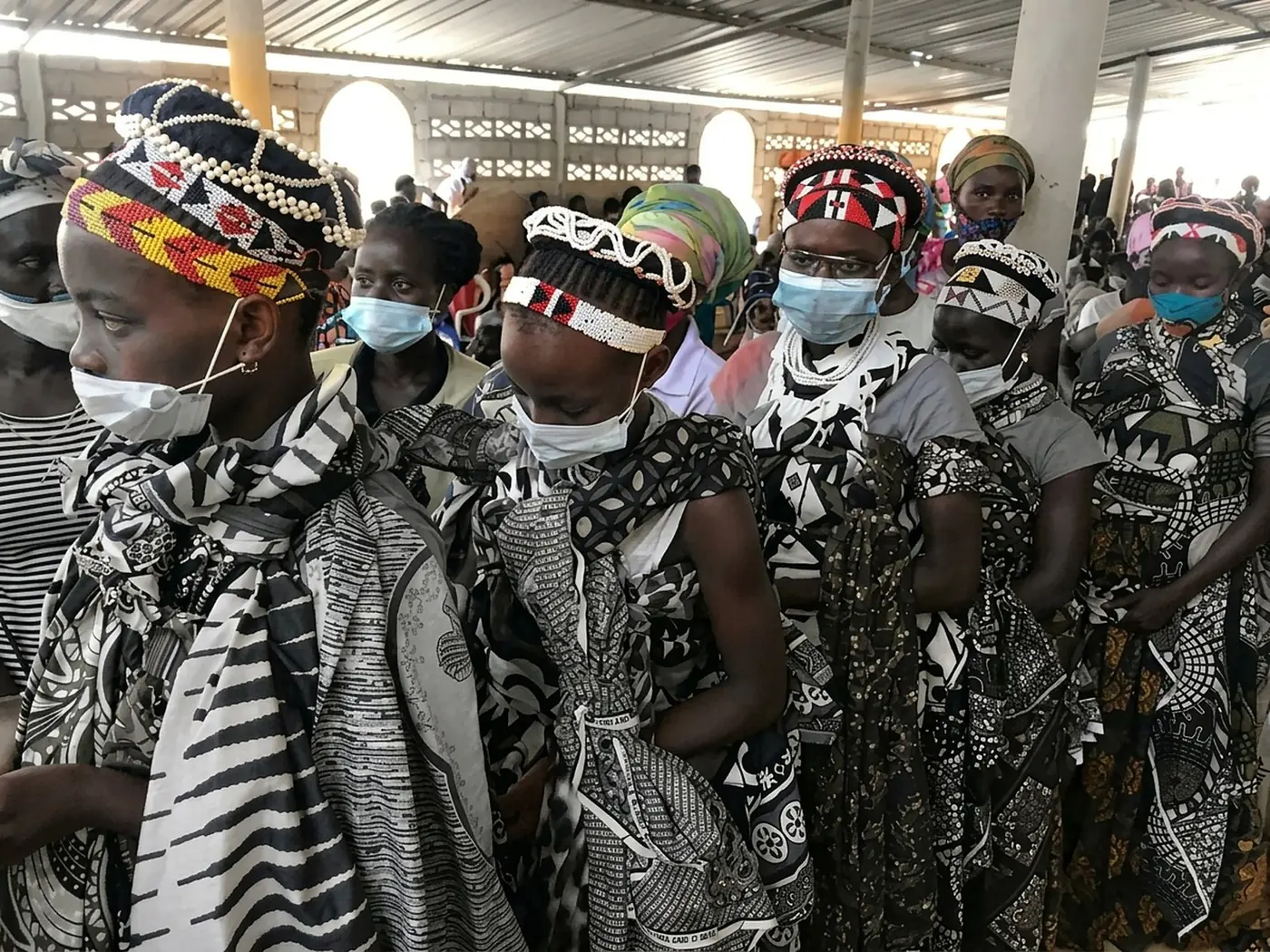
In southern Angola, the passage from adolescence to adulthood is, in certain communities, much more than a biological transformation. It also represents a social, symbolic and cultural transition through which a young woman is recognised by her family and community. It is in this context that the Efiko, also known as Éfiko or Efico, belongs: a female initiation ritual associated above all with the Nyaneka-Humbi peoples of Huíla province.
In a country whose cultural diversity remains insufficiently known beyond its borders, understanding the Efiko means coming closer to a conception of existence in which the individual is defined not only by their personal path, but also by the bonds they form with family, ancestors and community.
Far from being a uniform ceremony across the whole territory, the Efiko has variants that depend on communities, localities and social change. Its practices must therefore be understood in the specific context in which they take place, without confusing the traditions of the Nyaneka-Humbi with those of the Mucubal, the Kwanyama or other peoples of southern Angola.
1. Anthropological significance and social status
The Efiko cannot be reduced to a puberty celebration. In its social dimension, it is a process of public recognition, transmission of knowledge and affirmation of cultural identity. The young woman who takes part in the ceremony comes to occupy a symbolically distinct position in the community, through a process in which the family plays a fundamental role.
Serafim Lucas Gaspar's study, published in 2021, analyses the Éfiko among the Nyaneka-Humbi of Huíla and highlights its importance in the social construction of female identity. The research emphasises the prestige associated with initiates and the way the ritual conveys local conceptions of what it means to become a woman in that society.
In this cultural universe, initiation is linked to family upbringing, relations between generations, preparation for adult responsibilities, and social expectations concerning marriage and motherhood.
Oral tradition also preserves beliefs according to which failing to perform the ritual may bring negative consequences for the young woman or her family. Some narratives associate the absence of initiation with misfortune or with difficulties related to having children. These beliefs should be understood as elements of particular community cosmologies, not as proven facts or real consequences of the ritual's absence.
It is equally important to recognise that traditional expectations surrounding womanhood may coexist with diverse individual experiences. The women who take part in these ceremonies are not a homogeneous group, and the way they interpret their meaning may vary according to generation, education, personal experience and social context.
The Efiko thus reveals a fundamental insight of anthropology: rituals do not merely represent an already existing culture. They also take part in shaping identities, defining social roles and passing on the values a community considers important.
2. The phases of the ritual: seclusion, learning and the transmission of knowledge
The Efiko may involve different moments of preparation, seclusion, instruction and public presentation. The sequence, duration and procedures vary between communities, so there is no sufficient basis for presenting every stage as mandatory or universal.
Seclusion and the beginning of initiation
In certain descriptions of the ritual, the young women are brought together and temporarily removed from their daily routines, staying in a space reserved for initiation.
This period symbolically marks the separation between an earlier stage of life and the one the community recognises through the ceremony. Seclusion should not be interpreted merely as physical isolation: it is also a time of preparation for the social transformation being celebrated.
The age of the participants and the circumstances that determine the start of the ritual may vary. Although some descriptions associate initiation with puberty, it should not be assumed that all communities follow the same criteria or hold the ceremony according to a fixed calendar.
Guidance of the initiates
The accompaniment of the young women by older women is an important element in descriptions of the Efiko. These women play a role in passing on knowledge, preparing the participants and preserving customs.
The learning may cover family relationships, community responsibilities, socially valued behaviour, personal care and the expectations associated with adult life.
It is through this process that the experience of earlier generations takes on an educational dimension. Knowledge is not passed on solely through the written word or formal institutions, but also through oral tradition, observation and participation in community practices.
Silence, discipline and endurance
Some accounts of the Efiko place special importance on silence, restraint in gesture and the ability to endure certain trials. In some contexts, these practices are interpreted as signs of discipline, self-control and readiness for future responsibilities.
However, accounts of an absolute ban on speaking, the exact length of confinement, or the obligation to endure dangerous situations should be contextualised and confirmed with local sources. It is not rigorous to present episodes passed down orally as rules common to all communities.
The same care should guide the interpretation of teachings related to marriage, sexuality and motherhood. Their meaning should be analysed within the historical and cultural framework in which they were transmitted, without ignoring contemporary changes in conceptions of gender, autonomy and education.
3. The climax: cattle, traditional aesthetics and family honour
In communities where cattle-raising has economic, social and symbolic importance, cattle may hold a central place in initiation ceremonies. Their presence goes beyond material value: it relates to family prosperity, reciprocity among relatives, and the ability to welcome and feed the community.
Some descriptions of the Efiko mention the offering of animals by the initiates' families and the performance of ceremonial acts involving cattle. However, the specific procedures, the names given to the stages and the number of animals involved should not be generalised without proper documentation for each community.
The family's participation reflects the recognition that initiation is not only an individual experience. It is also a collective event whose preparation involves resources, labour and cooperation among different members of the community.
The body as an expression of cultural identity
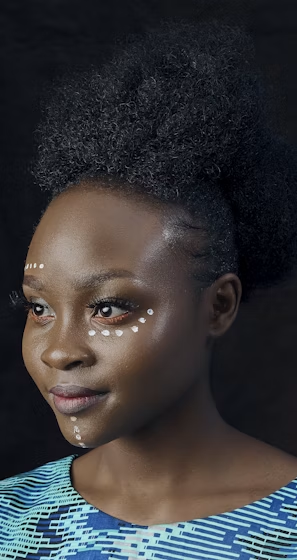
The aesthetic preparation of the initiates is another expressive dimension of the ritual. Hairstyles, braids, beads, adornments and traditional fabrics may carry meanings that go beyond ornamentation.
The body becomes a space of cultural representation, in which appearance, gestures and accessories convey belonging, status and historical continuity.
Hairstyling techniques and the materials used vary according to local customs and family choices. It is therefore important to avoid the idea that there is a single feminine aesthetic characteristic of the whole of southern Angola.
Valuing these elements helps us understand material culture as part of collective memory. Objects and adornments are not mere remnants of a distant past: they can continue to fulfil social and symbolic functions in the communities that preserve them.
4. The great presentation celebration: festivity, reciprocity and recognition
The public presentation of the initiates is one of the most visible moments of the Efiko. The community gathers to witness the ceremony, celebrate the transition and acknowledge the families' involvement.
Music, dance, traditional dress and the sharing of food can turn the event into a meeting place between generations. The celebration renews family ties, strengthens community bonds and passes on knowledge through cultural expressions that do not depend solely on words.
The names of the stages, the dances performed and the organisation of the celebration vary from region to region. Terms such as Lwakunwa or Ovindjomba, found in some descriptions, should be linked to the communities and contexts in which they were documented, rather than presented as universal elements of the Efiko.
Hospitality and family reputation
In some communities, the festive dimension includes sharing meat, traditional drinks and other food. The ability to host participants may reflect the family's resources and its commitment to relationships of reciprocity.
Yet it would be reductive to interpret the number of animals slaughtered or the scale of the celebration simply as a display of wealth. Sharing can also express generosity, solidarity and recognition of the obligations that bind members of the community together.
Hospitality, in this context, should be understood as a social practice that helps maintain relationships between families and local groups.
Marriage and relations between families
In some ethnographic descriptions, the Efiko is linked to the social recognition of young women and to expectations of marriage. The celebration may provide an occasion for young men and women to meet, but it should not be mistaken for a universal permission to marry or an obligation to do so.
Traditional marriage and negotiations between families also vary by region. The alambamento (bridewealth), for example, takes particular forms and meanings in different Angolan communities, so it is not accurate to attribute to all Efiko participants a fixed list of animals or a single model of marriage payment.
More important than reducing the ceremony to preparation for marriage is understanding its role in organising social relationships and passing on local conceptions of family, belonging and responsibility.
5. The Efiko between tradition and contemporary change
The preservation of the Efiko raises an essential question for Angolan society: how can cultural heritage be safeguarded without turning traditions into static realities, cut off from historical change?
Communities are not museums. Their practices change through education, urbanisation, geographic mobility, relations between generations and contact with other ways of thinking about society. The contemporary meaning of the Efiko must therefore be understood through the experiences of the communities themselves and, above all, of the women who take part in the ritual.
Preserving a tradition does not mean preventing critical reflection on its components. It means recognising its historical importance, documenting the knowledge passed down by elders, and creating the conditions for new generations to understand their cultural heritage.
This approach also demands responsibility in how culture is presented to the public. Images, accounts and descriptions should respect communities, avoid stereotypes and distinguish documented knowledge from outside interpretations.
The Efiko deserves to be studied not only as a rite of passage, but as a window onto the relationships between identity, gender, memory, family and social power in southern Angola.
Conclusion: a living memory of Angolan heritage
The Efiko holds an important place in the cultural heritage of certain communities in southern Angola. Its significance lies in its ability to bring together different dimensions of collective life: education across generations, social recognition, aesthetic expression, family reciprocity and the continuity of cultural memory.
Understanding it requires more than describing its festive moments. It means getting to know the communities that practise it, listening to the women who have lived the experience, and recognising the differences between groups and localities.
In a rapidly changing world, cultural heritage does not survive only through repeating the gestures of the ancestors. It also survives through knowledge, research and the ability to pass on its meanings to new generations.
The Efiko reminds us that Angola's cultural wealth lies not only in what the country possesses, but also in the knowledge, memories and forms of belonging that its communities continue to build and pass on.
Knowing these traditions is therefore a way of recognising Angola's diversity and of understanding that its history is written not only in archives and monuments, but also in the bodies, words and memories of its peoples.
Further reading
- Serafim Lucas Gaspar (2021), Éfiko: tornar-se "mulher" entre o povo Nhãneka-Humbi da Huíla – Angola ("Éfiko: becoming a 'woman' among the Nyaneka-Humbi people of Huíla – Angola"). Academic work available in the UNILAB Institutional Repository.
- Rosa Maria A. J. Melo (2005), Mulher é aquela que "comeu o boi": o efuko e a construção do género no grupo étnico Handa ("A woman is one who has 'eaten the ox': the efuko and the construction of gender among the Handa ethnic group"). Article published in the journal Lusotopie, available via its bibliographic record and DOI.
- Carlos Estermann, ethnographic studies of the peoples of the Huíla district, documenting variations in initiation rites. As a historical source, it should be read critically, bearing in mind the colonial context in which it was produced.
- Infopédia, entry "efico", for the definition and etymology of the term: view the dictionary entry.