Is There Such a Thing as a “Black European”?
Translated from Portuguese. Read the original →

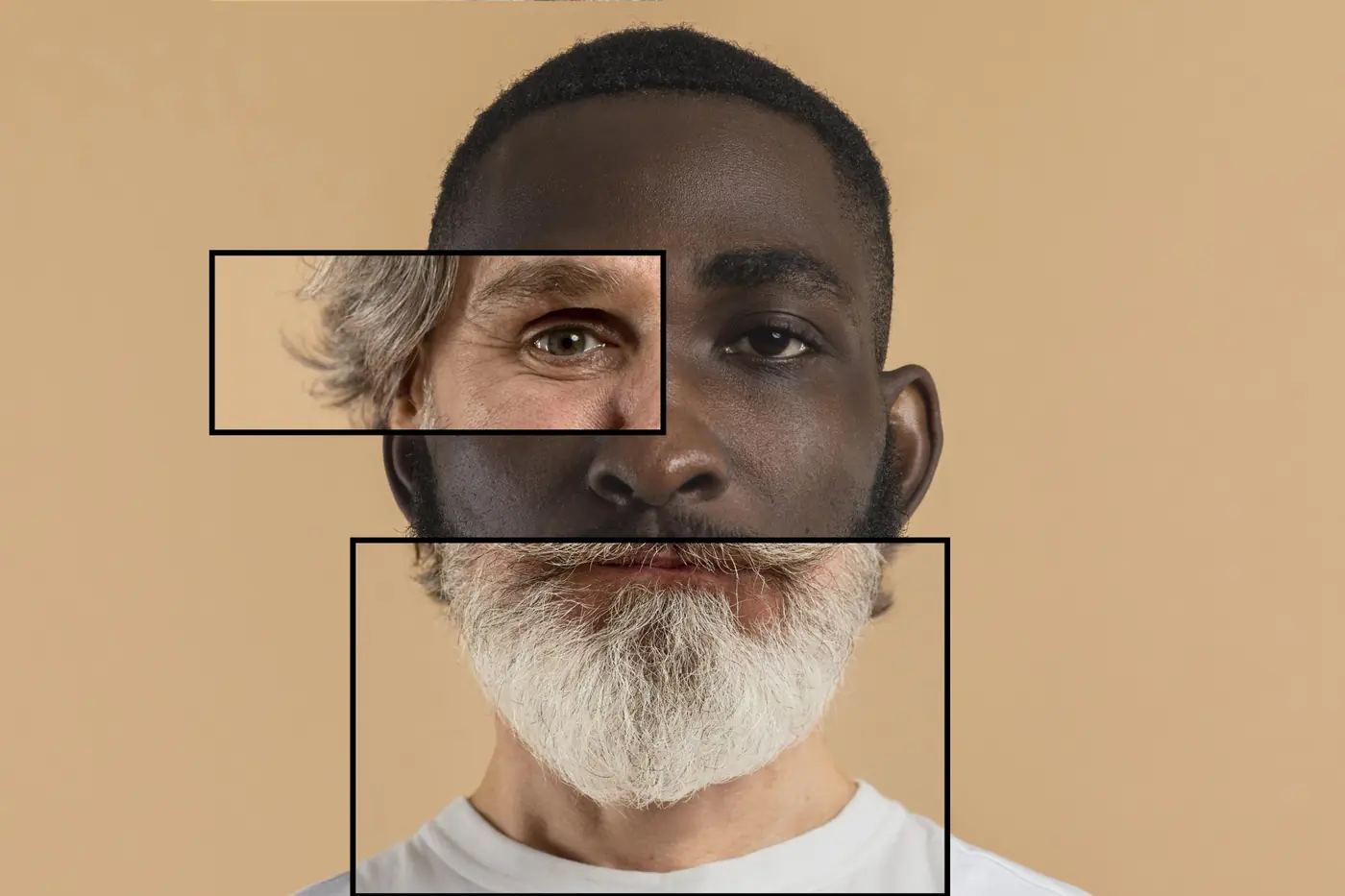
What does it mean to be European? Being born in a country on the continent, holding its nationality, speaking its language, attending its schools, and participating in its economic and cultural life should be enough to be recognised as an integral member of society. Yet, for many Black citizens, European belonging continues to be accompanied by questions, suspicions, and experiences of discrimination that are rarely imposed on the majority.
The question is not whether Black Europeans exist. They do, and they are part of the continent’s history, culture, economy, and political life. The deeper question is this: Does Europe fully recognise as its own everyone to whom it legally grants citizenship?
Answering this question requires distinguishing between two realities. The first is citizenship, defined by the laws of each state. The second is social belonging, shaped by recognition, participation, and the ability to live without one’s family background or skin colour being constantly used to question one’s legitimacy.
It is in this gap between legal rights and everyday experience that one of the contradictions of contemporary European societies becomes apparent.
Belonging Under Suspicion
Imagine a Black person born in France to French parents, educated in French schools, speaking French as their first language, and having spent their entire life in the country. Legally, their nationality depends on the applicable rules and their particular circumstances. Culturally and socially, however, that person may be just as French as any other citizen.
Nevertheless, questions such as “Where are you from?” or, more pointedly, “But where are you really from?” can convey a subtle message: that physical appearance is evidence of foreignness, even when every aspect of someone’s life points to an established sense of belonging.
A single question does not necessarily constitute a racist act. Its meaning depends on the context, the intention, and whether it is repeated. The problem arises when Black people are systematically treated as foreigners even when they were born in the country, or when their national identity seems to require additional justification.
Citizenship may be recorded on a document. Social recognition, however, does not automatically come with a passport.
This contradiction is not exclusive to Europe. It also exists in the United States and other societies shaped by histories of slavery, colonialism, migration, and racial hierarchies. In the European context, it is particularly significant because it brings universal principles of equality into conflict with social practices that continue to condition the recognition of certain minorities.
When Merit Is Called into Question
In September 2026, Canadian writer of Haitian origin Thélyson Orélien became the centre of a literary controversy in France. His novel C'était ça ou mourir, which had initially attracted considerable attention, was accused on social media of having been produced substantially with the help of artificial intelligence. The author rejected the allegations that AI had been used to write the novel and stated that he had been subjected to racist attacks. The controversy attracted widespread attention and contributed to the book’s removal from the Prix Goncourt selection.
Later, in October, Orélien acknowledged earlier instances of plagiarism and apologised for them, while maintaining his rejection of the allegations concerning the use of artificial intelligence in his novel. These developments are important to understanding the complexity of the case: it would be inaccurate to present every accusation as unfounded or to treat the controversy, by itself, as proof of racism.
Nevertheless, the episode raises a legitimate question: how do public suspicions about a writer develop, and to what extent can their background, identity, or social position influence how their work is received?
An accusation should be examined on the basis of evidence, regardless of the identity of the person concerned. However, the possibility of unequal treatment deserves investigation whenever there are indications that similar standards may be applied differently to people from different backgrounds.
The principle should be simple: merit should neither be presumed nor denied on the basis of skin colour. It should be assessed according to transparent, consistent criteria that apply equally to everyone.
Fighting racism does not require abandoning critical scrutiny. It requires ensuring that such scrutiny is fair.
When Equality Encounters Police Power
Relations between racial minorities and law enforcement are another area in which the gap between legal principles and individual experiences deserves particular attention.
In France, cases such as that of Théo Luhaka, who was assaulted by police officers in 2017, and Michel Zecler, a Black music producer assaulted by police in Paris in 2020, sparked significant public debate about police violence, institutional accountability, and racial discrimination.
These incidents do not justify the conclusion that every police intervention is motivated by racism. They nevertheless demonstrate the importance of investigating allegations of abuse, ensuring independent oversight mechanisms, and guaranteeing that law enforcement operates within the limits of the law.
The central issue is not to portray Black citizens and police officers as homogeneous opposing groups. It is to determine whether everyone receives equivalent protection and treatment, and whether institutions can identify, prevent, and correct discriminatory practices.
Racial profiling refers to the use of racial or ethnic origin, skin colour, or associated characteristics as a decisive basis for police suspicion, rather than relying on objective, individualised criteria.
When appearance becomes a substitute for reasonable suspicion based on concrete evidence, public trust in institutions is undermined. When someone feels they are being stopped not because of what they have done, but because of how they look, the promise of equality before the law loses credibility.
A democracy is not measured solely by the existence of laws prohibiting discrimination. It is also measured by its ability to ensure that those laws are respected in practice.
What Do the European Statistics Reveal?
Available data help assess the scale of the problem beyond individual testimonies.
The report Being Black in the EU, published in 2023 by the European Union Agency for Fundamental Rights (FRA), examined the experiences of nearly 6,800 people of African descent across 13 EU Member States. Its findings reveal significant levels of racial discrimination and persistent difficulties in interactions with institutions.
Among the main findings are the following:
Racial discrimination: 45% of participants reported experiencing racial discrimination during the five years preceding the survey, compared with 39% in the previous study conducted in 2016.
Police stops: Among participants who had been stopped by police during the previous year, 58% believed that their most recent stop had been motivated by racial profiling.
Barriers to reporting: Only 9% of participants who experienced discrimination reported the incident during the reference period used by the study.
Employment and housing: Discrimination was also identified as a significant obstacle to accessing employment and accommodation.
These findings must be interpreted carefully. The survey does not automatically represent every Black person living in the European Union, nor does it establish that all experiences of discrimination have the same cause. It does, however, document the experiences reported by a sample of people of African descent in the countries covered by the study.
Its significance lies precisely in showing that discrimination cannot simply be reduced to a series of unrelated incidents. When similar experiences emerge across different countries and in areas as important as employment, housing, and contact with the police, it becomes necessary to examine the social and institutional mechanisms that may contribute to them.
Anti-discrimination legislation is essential. Yet its effectiveness also depends on enforcement, access to justice, data collection, and victims’ confidence in reporting mechanisms.
Portugal: Equality Must Also Be Examined
Portugal is not outside this debate.
For a long time, the image of a country shaped by coexistence between different peoples and cultures helped sustain a narrative of racial tolerance. The history of Portugal’s relations with Africa and other territories may help explain how this image developed, but it is not sufficient to demonstrate that discrimination is absent from contemporary Portuguese society.
A history of intercultural contact does not automatically eliminate inequality. Likewise, acknowledging the existence of racism does not mean denying legal progress or the positive experiences of coexistence among different communities.
The sixth report on Portugal by the European Commission against Racism and Intolerance (ECRI), published in 2025, again raised concerns about allegations of racist abuse and racial profiling by police officers in Portugal. The report includes recommendations intended to strengthen mechanisms for preventing, monitoring, and combating racism and intolerance.
This assessment should be taken seriously without turning it into a blanket condemnation of Portuguese institutions or the population. The purpose of an independent evaluation is precisely to identify specific problems and recommend measures to address them.
It is also necessary to examine access to employment, housing, education, and professional advancement. Reliable official data are essential for this purpose, with clearly defined indicators that allow meaningful comparisons between different population groups.
Statistics alone cannot resolve inequality. They can, however, make it more difficult to ignore and help determine whether public policies are producing results.
A society committed to equality should not fear investigating its own contradictions.
What Does It Actually Mean to Be European?
The question in the title contains an irony: why is the existence of a Black European still debated as though it were a paradox?
European identity has never been static. The continent’s societies have been shaped by migration, conflict, cultural exchange, and political transformation. National identities have also evolved over time, reflecting changes in laws, borders, and conceptions of citizenship.
There is therefore no single physical appearance that determines who can be considered European. Skin colour does not, in itself, define a person’s nationality, culture, language, or sense of belonging.
A Black citizen born in Lisbon should not have to demonstrate an additional connection to Portugal for their Portuguese identity to be legitimate. A Black citizen born in Paris should not be regarded as less French because of their African ancestry. And a Black citizen born in Berlin does not cease to be part of German society because they do not fit a traditional image of national identity.
This does not mean that identities are simple or that family origins no longer matter. A person may be Portuguese and Angolan, French and Congolese, German and Ghanaian, or identify with several cultural heritages simultaneously. These identities do not necessarily exclude one another.
The decisive question is whether each person can define their relationship with these heritages without society imposing an identity based exclusively on their appearance.
Conclusion: Belonging Should Not Depend on Skin Colour
The existence of Black Europeans is not a theoretical possibility. It is a human, historical, and contemporary reality.
The real challenge is to ensure that formal citizenship translates into effective equality, that merit is assessed according to fair standards, that law enforcement operates proportionately and responsibly, and that discrimination can be reported without fear or distrust of institutions.
It is not enough to declare that everyone is equal before the law if certain citizens continue to feel that they must repeatedly prove they belong in the places where they live. Nor is it sufficient to attribute every inequality to a single cause. We must examine the context, assess the evidence, and identify the specific mechanisms that produce unjust outcomes.
The answer to the question in the title is therefore clear: yes, Black Europeans exist. Their identity is no less European because of their skin colour, and it does not depend on the approval of a majority.
What remains in question is not the legitimacy of their existence, but the ability of European societies to fully recognise a reality that is already part of them.
Europe does not need to decide whether its Black citizens are European enough. It needs to ensure that their citizenship, dignity, and freedom are not conditional on the colour of their skin.
Belonging to a society should not be a privilege granted by the gaze of others. It should be a reality protected by rights, recognised by institutions, and respected in everyday life.