Giants of Appearance: How TAAG Isolates Angola to Impress the World
Translated from Portuguese. Read the original →

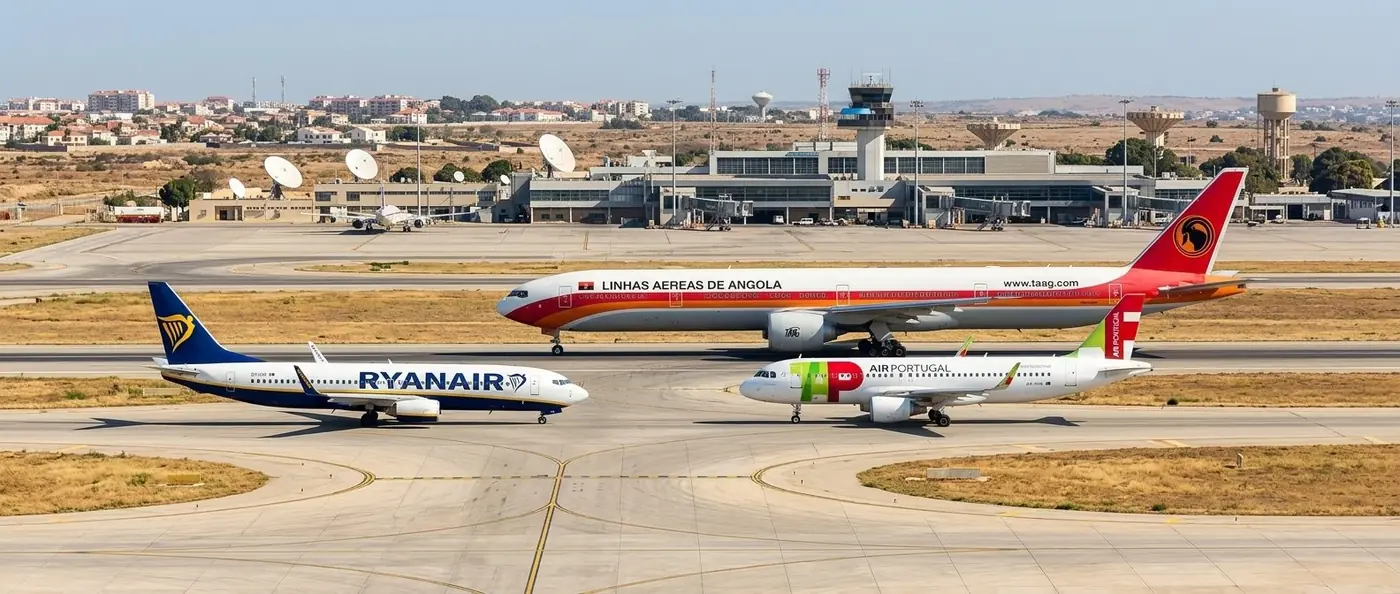
In Angola, however, TAAG Angola Airlines faces a strategic challenge that deserves closer scrutiny: how can an airline project an image of international grandeur while domestic connectivity remains a significant obstacle to the country's economic and social development?
This question is not intended to dismiss the importance of international routes. Rather, it seeks to examine whether the airline's priorities adequately reflect Angola's internal needs.
The Illusion of Grandeur and the Challenges of Operational Efficiency
TAAG's fleet includes different types of aircraft designed to serve distinct markets, from long-haul international routes to regional and domestic services. Operating larger aircraft can be justified when demand, route profitability and network strategy support their use.
However, the possession of modern or wide-body aircraft does not, in itself, demonstrate the strength of an airline. The real measure of success lies in its ability to deploy the right aircraft on the right routes, maintain reliable schedules and provide services that meet the needs of passengers and businesses.
For a country as geographically extensive as Angola, with considerable economic potential beyond Luanda, domestic connectivity should be a strategic priority.
An airline may strengthen its international profile while still struggling to fulfil one of its most fundamental responsibilities: connecting its own territory.
The central question, therefore, is not whether TAAG should operate international flights. It is whether its overall strategy gives sufficient attention to the domestic network that could help drive Angola's development.
The Isolation of the Provinces and the Cost of Disconnection
The difficulties associated with domestic air travel extend beyond the aviation sector. They affect economic activity, access to services and the ability of provinces to participate fully in national development.
When air connections are limited, irregular or prohibitively expensive, the consequences reach far beyond passengers.
1. Trade and Economic Activity
Angola's economic potential is not confined to Luanda. Its provinces possess agricultural resources, mineral wealth, commercial opportunities and other assets that could contribute more substantially to national prosperity.
However, weak transport connections can make it harder for businesses to move people, establish partnerships, access markets and coordinate operations across the country.
Although air transport cannot replace roads, railways or maritime infrastructure, it plays an important role in reducing travel time and facilitating business mobility.
A stronger domestic network could therefore help improve economic integration, particularly where surface transport remains slow or difficult.
2. Tourism and the National Economy
Angola has considerable tourism potential, including natural landscapes, waterfalls, national parks, beaches and cultural heritage sites.
Yet attracting visitors requires more than promoting destinations internationally. Travellers also need practical and reliable ways to reach them.
If domestic flights are limited, expensive or poorly coordinated, travelling between provinces becomes more difficult. This can discourage visitors, increase travel costs and reduce the economic benefits that tourism might generate for local communities.
Developing domestic air connections, alongside improvements in accommodation, roads and tourism services, could help turn this potential into tangible economic activity.
3. Investment and Regional Development
Investors need predictable transport links to assess opportunities, visit projects and manage operations.
Reliable connections between Luanda and other provincial capitals could facilitate investment, strengthen business relationships and reduce some of the logistical barriers faced by companies operating across Angola.
Domestic connectivity is therefore not merely a matter of convenience. It is one of the conditions that can help create a more integrated national economy.
The Overlooked Solution: A Fleet Adapted to Angola's Reality
The solution is not necessarily to reduce the size of TAAG's international fleet or abandon its ambition to connect Angola to the world. International routes can generate revenue, strengthen trade links and improve the country's global accessibility.
The challenge is to achieve a more effective balance between international ambitions and domestic needs.
A fleet strategy adapted to Angola's circumstances should take into account passenger demand, route profitability, operating costs, airport infrastructure and the characteristics of each market.
Smaller aircraft may be more appropriate for certain routes with lower passenger volumes, while larger aircraft can serve markets with stronger demand. The objective should be to match capacity to actual needs rather than pursue an image of grandeur for its own sake.
Three priorities deserve particular attention.
First, strengthen domestic routes according to demand. TAAG should evaluate which connections are most important for economic activity, regional integration and passenger mobility, while ensuring that flight schedules are reliable and commercially sustainable.
Second, adopt a fleet strategy based on operational efficiency. Aircraft selection should reflect route characteristics, maintenance requirements, fuel consumption, passenger demand and total operating costs. Fleet decisions should be guided by measurable performance rather than prestige.
Third, improve transparency and accountability. Clear information about route performance, flight frequency, operational reliability and the use of public resources would enable citizens to assess whether the airline is fulfilling its national mission.
These priorities should form part of a broader transport strategy involving roads, railways, airports and other infrastructure. No airline can resolve every regional transport problem on its own, but it can make a meaningful contribution to a more connected country.
Angola Must Also Be Connected to Itself
The debate surrounding TAAG should not be reduced to a choice between international prestige and domestic development. Angola needs both. It needs an airline capable of connecting it to international markets and one that contributes effectively to mobility within its own borders.
The real concern emerges when the pursuit of international visibility overshadows the need to strengthen domestic connections. A national airline cannot be considered successful solely because its aircraft cross oceans or arrive at major international airports.
Its contribution must also be measured by the opportunities it creates for citizens, the economic activity it supports and the connections it provides between provinces.
Angola's development depends, in part, on its ability to overcome the geographical and logistical barriers that separate its regions. An effective domestic aviation network could help reduce those barriers, support tourism and facilitate business activity.
Ultimately, the question is not how impressive TAAG looks to the outside world, but how useful it is to the country it represents.
Angola does not merely need to fly to the world. It needs to be able to connect with itself.