The biggest economic project in African history
One of the world’s biggest economic projects is under construction in Africa. Making it a reality, however, raises deep questions of integration, inequality and delivery.
Translated from Portuguese. Read the original →

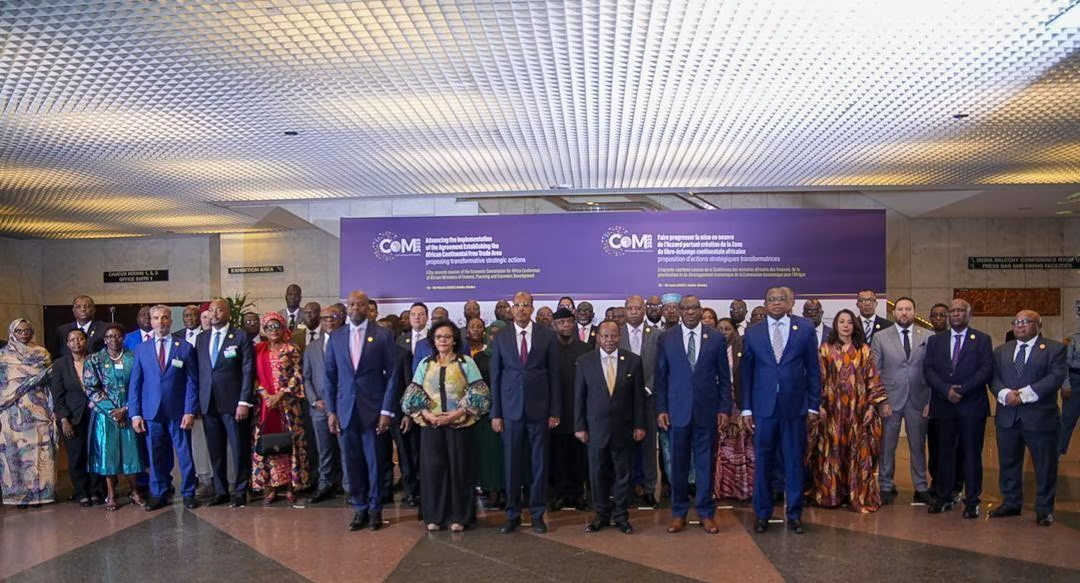
For centuries, Africa’s borders were drawn by outside interests. Lines traced on maps at the Berlin Conference (1884–1885) divided peoples, separated historic markets and fragmented economies that had once been linked by vast trade routes.
Today, more than a century later, Africa is trying to rebuild part of that lost connection through the African Continental Free Trade Area (AfCFTA), considered the largest free trade agreement in the world by number of participating countries.
But can this project truly transform the continent’s economic future?
African trade before colonisation
Long before the arrival of Europeans, Africa had dynamic trade networks linking the different regions of the continent.
Gold from the Mali Empire travelled across the Sahara.
Salt was carried by caravans that crossed the deserts.
Swahili merchants connected East Africa to India, Arabia and China.
The kingdoms of Kongo, Benin and Monomotapa maintained complex trade relations long before modern states were created.
Economic exchange was an African reality long before colonisation.
The birth of the African Union and the dream of integration
Since the days of Kwame Nkrumah, Julius Nyerere and other Pan-Africanist leaders, there had been a vision of an economically integrated Africa.
These leaders believed that fragmentation was one of the main obstacles to development.
The creation of the African Union marked a new stage in that dream.
With Agenda 2063, African states began working on a common strategy to accelerate economic growth.
Colonisation and economic fragmentation
The Berlin Conference profoundly changed Africa’s economic logic.
The infrastructure built by the colonial powers had a simple purpose: to export raw materials to Europe.
Railways did not connect African countries to one another.
They connected mines and plantations to seaports.
As a result, after independence many countries remained economically dependent on external markets.
Africa’s trade structure stayed oriented outwards.
What is the AfCFTA?
The African Continental Free Trade Area aims to gradually remove customs duties on most goods traded between African countries.
Its objectives include:
- increasing intra-African trade;
- creating regional value chains;
- attracting foreign investment;
- reducing dependence on external markets;
- promoting industrialisation.
It is the largest economic project ever launched in Africa.