From Leopold II’s Rubber to Today’s Technological Minerals
Translated from Portuguese. Read the original →

The Democratic Republic of the Congo (DRC) occupies a strategic position in the global economy. Its mineral resources supply industries essential to electric mobility, electronics and advanced technologies. Yet this abundance contrasts sharply with persistent poverty, insecurity and inequality affecting many Congolese communities.
This paradox cannot be explained solely by geology or fluctuations in international markets. It requires an understanding of colonial exploitation, the economic structures that survived it and the political conflicts that continue to shape control over the country's resources.
The concept of Genocost, promoted in Congolese public debate, seeks to highlight the relationship between mass violence, natural resource exploitation and the economic gains derived from conflict. It draws attention to the human lives sacrificed within systems of extraction. However, the term must be used carefully: a political and commemorative concept does not replace the specific legal classification of crimes.
Colonial Roots: The Terror of Rubber
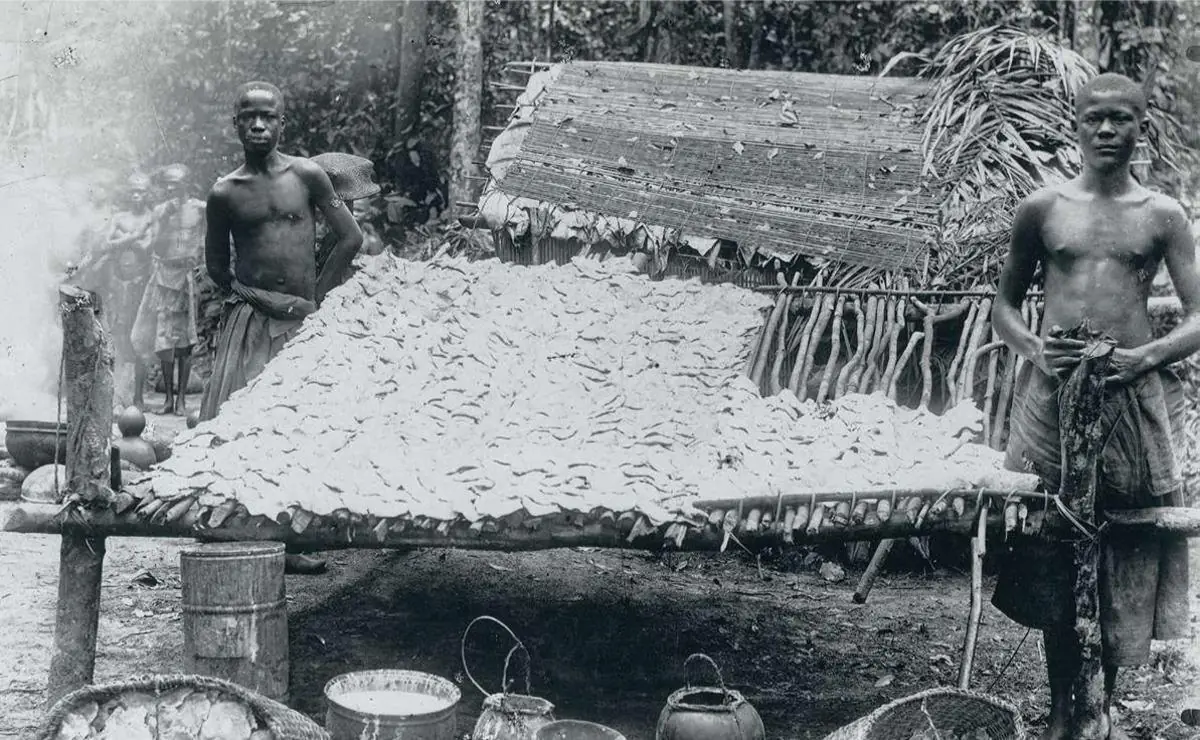
Between 1885 and 1908, the Congo Free State was under the personal rule of King Leopold II of Belgium. Despite the philanthropic rhetoric used to justify European intervention, the territory was subjected to an economic system designed to maximise resource extraction, including ivory and natural rubber.
In the late nineteenth century, industrial expansion and new applications for rubber drove up international demand. Leopold II granted extensive concessions to private companies, whose commercial interests were protected through coercive systems of population control.
Congolese communities were subjected to forced labour and rubber collection quotas. Failure to meet these demands could result in brutal punishment, hostage-taking, executions and mutilation.
The scale of the demographic catastrophe remains debated among historians. The absence of reliable population censuses for the period makes it difficult to establish a definitive death toll. Published estimates vary considerably. Nevertheless, forced exploitation, famine, disease and violence caused profound human devastation.
In 1908, following mounting international pressure, the Congo Free State came under Belgian state administration. This institutional change did not erase the suffering of the population or immediately dismantle colonial structures of exploitation.
From Latex to Cobalt: The New Geography of Wealth
In the twenty-first century, international demand has shifted towards other resources. Cobalt, copper, tantalum and other minerals have become increasingly important to advanced manufacturing and the energy transition.
According to the United States Geological Survey, the DRC accounted for approximately 75% of global cobalt production and 51% of global tantalum production in 2024. These figures demonstrate the country's strategic importance to international industrial supply chains.
Cobalt is used in certain rechargeable batteries and specialised industrial applications. Tantalum, associated with minerals such as columbite-tantalite, commonly known as coltan, is used in electronic components. Copper is essential to cables, motors and electrical infrastructure.
This mineral wealth represents an extraordinary development opportunity. It can generate public revenue, employment, infrastructure, professional training and industrial capacity. However, these benefits do not automatically follow from the presence of natural resources.
The central questions are who controls extraction, who negotiates commercial terms, where processing takes place and how the resulting revenues are distributed.
Economic sovereignty is not simply about owning resources. It also requires transparent contracts, effective production oversight, tax collection, technical expertise and a gradual expansion of domestic value creation.
The Human Cost of the Technological Transition
The energy transition is often presented as a pathway towards lower emissions and the transformation of transport and energy systems. Yet the environmental benefits of new technologies do not eliminate the social and labour concerns associated with their production.
In the DRC, industrial and artisanal mining coexist under very different conditions. Some artisanal miners depend directly on extraction for their livelihoods, often working in hazardous environments with insufficient protection and oversight.
Research on the sector has documented concerns involving child labour, mine safety and informal working conditions. These problems should not be generalised to every mining site, but neither can they be ignored by companies using these minerals.
In the country's east, armed groups, territorial competition, regional dynamics and illicit trading networks have contributed to instability. In certain contexts, control over mines and trading routes provides revenue to actors involved in violence.
However, it would be misleading to explain the entire Congolese conflict exclusively through mineral exploitation. Political rivalries, land disputes, local tensions, regional intervention and institutional fragility also play significant roles.
Responsibility extends beyond the DRC's borders. Governments, traders, intermediaries and companies all have a role in preventing armed groups from benefiting from mineral supply chains and in identifying labour abuses. Traceability, independent oversight and commercial transparency are important tools, although they cannot replace security, justice and political accountability.
Domestic Responsibility and Regional Dynamics
An analysis of Congo's exploitation cannot focus exclusively on foreign interests. It must also examine domestic political decisions, institutional transparency and the management of public resources.
Corruption, the capture of institutions by private interests and weak oversight can undermine the state's ability to turn mineral wealth into public services. When revenues fail to produce schools, hospitals, roads, electricity and economic opportunities, the country loses part of its development potential.
This does not mean blaming Congolese citizens for the violence they experience or ignoring the influence of foreign actors. It means recognising that sovereignty depends both on resisting external pressure and on building institutions accountable to citizens.
The regional dimension is particularly important in eastern DRC. Cross-border movements of people, goods and minerals require cooperation between neighbouring countries, traceability mechanisms and verifiable commitments to prevent support for armed groups.
Sovereignty, Deterrence and State-Building
The Congo's history raises a fundamental question: how can a resource-rich country protect its territory without reducing national security to military force alone?
A sovereign state needs professional security forces operating under the law. It also needs effective intelligence services, border controls, criminal investigation capabilities and judicial institutions capable of tackling the networks that finance violence.
Deterrence has a military dimension, but it goes beyond military power. Diplomacy, regional cooperation, institutional stability and the enforcement of the law are equally important. A purely military strategy may fail to resolve conflicts sustained by economic interests, territorial disputes and a lack of public trust.
Economic sovereignty also requires transparent mining contracts, measures against tax evasion, public disclosure of revenues, investment in domestic processing and the training of Congolese technical professionals.
Conclusion: Congo's Wealth Must No Longer Be a Curse
From the rubber extracted under Leopold II to the minerals powering contemporary technologies, the history of the Congo reveals a persistent tension between abundant natural resources and the ability to transform that wealth into collective well-being.
The historical contexts are not identical. Nineteenth-century colonial rule, contemporary industrial mining and present-day armed conflicts involve different structures, actors and legal frameworks. Nevertheless, one question remains essential: who benefits from the extracted wealth, and who bears its human costs?
Genocost seeks to keep this question at the centre of public debate. Remembering the victims must serve not only to acknowledge the past, but also to demand transparency, justice and the prevention of future abuses.
The future of the Democratic Republic of the Congo will depend on its ability to build accountable institutions, protect its population, negotiate better economic terms and develop domestic industry.
True sovereignty begins when a country's wealth is measured not merely by what the world extracts from it, but by the living conditions it can provide for its own citizens.
Can the Congo transform its strategic importance in the global economy into genuine economic emancipation, or will it continue producing wealth whose benefits remain beyond the reach of too many of the people living above it?